
David: a young shepherd unshakable faith. a destiny that would change a nation

David: Born a King – The Animated Film That Rewrites the Journey of the Young Shepherd
The narrative of overcoming adversity, courage, and devotion that spans millennia takes on a spectacular visual form in the production David: Born a King. This work represents a contemporary milestone by transforming one of humanity’s best-known passages into a dynamic, emotional, and visually stunning animated film. By uniting the theological depth of the sacred scriptures with the modernity of major cinematic productions, the project succeeds in charming both children and adults. The story of the small boy from the fields of Bethlehem—who faced uncertainties, dangers, and the rejection of his own brothers before being anointed as the future ruler of Israel—is told with a unique sensitivity that celebrates the power of perseverance and spiritual surrender.
The Narrative Strength of the Bible and the Old Testament
The structural foundation of David: Born a King rests upon the sacred accounts found in the Bible, specifically within the books of the Old Testament. This historical and spiritual richness offers invaluable raw material for the construction of a dense and engaging screenplay. In adapting these ancient texts, the creators of the feature film took care to remain faithful to the classic events while introducing a modern cinematic rhythm. The journey of the young Hebrew is not presented statically; rather, the audience is transported to the arid and turbulent environment of the ancient Middle East, where tribes fought for survival and the search for divine guidance was the sole compass amidst political and military chaos.
The setting portrayed in the film captures the cultural and social essence of that era. We see how the daily lives of the tribes of Israel were constantly threatened by neighboring peoples and how spiritual traditions shaped the characters’ traits. The decision to ground the plot in the biblical account ensures a dramatic density that goes beyond mere children’s entertainment, transforming the animated film into an educational and inspiring document for families across generations.
The Prophet's Call and Biblical Prophecy
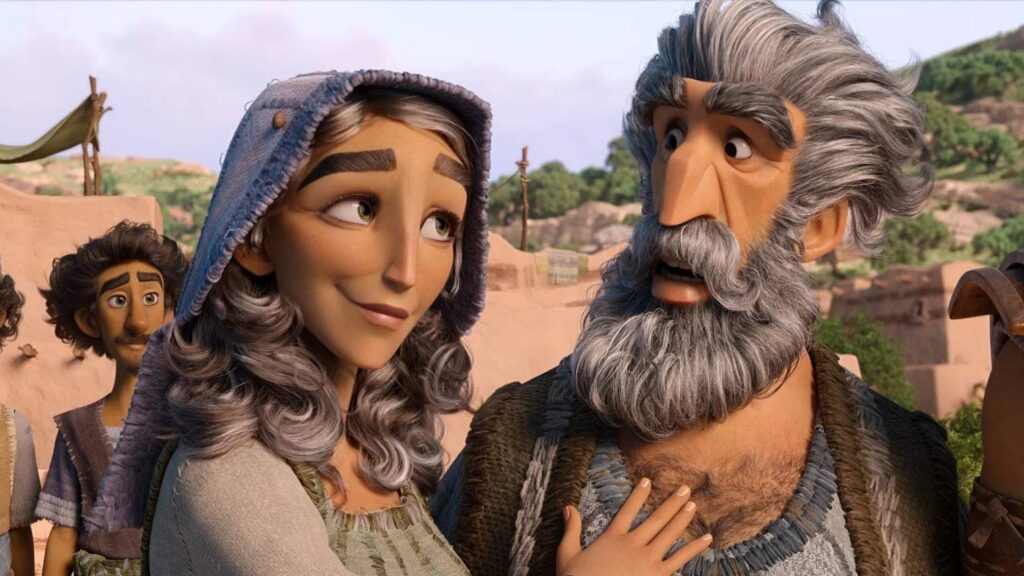
One of the turning points in the plot is the appearance of the prophet Samuel. Sent to Jesse’s house with the divine mission to find the new sovereign of Israel, Samuel personifies the voice of the Creator amidst human blindness. Those around him observed the stature, strength, and physical appearance of David’s older brothers, but the divine messenger brings to light an eternal lesson: celestial discernment looks at the heart, not outward appearances.
In this context, biblical prophecy plays a central role in tying the plot together. The boy’s anointing as king creates a fascinating contrast with his immediate reality. He does not receive an immediate coronation in a sumptuous palace; instead, he continues tending the flocks in the desert, keeping the promise of an extraordinary destiny close to his heart. This period of waiting and spiritual preparation is masterfully portrayed, showing that true leadership is forged in humility, patience, and the daily fulfillment of silent duty.
From Shepherd Boy to Spiritual Ascent
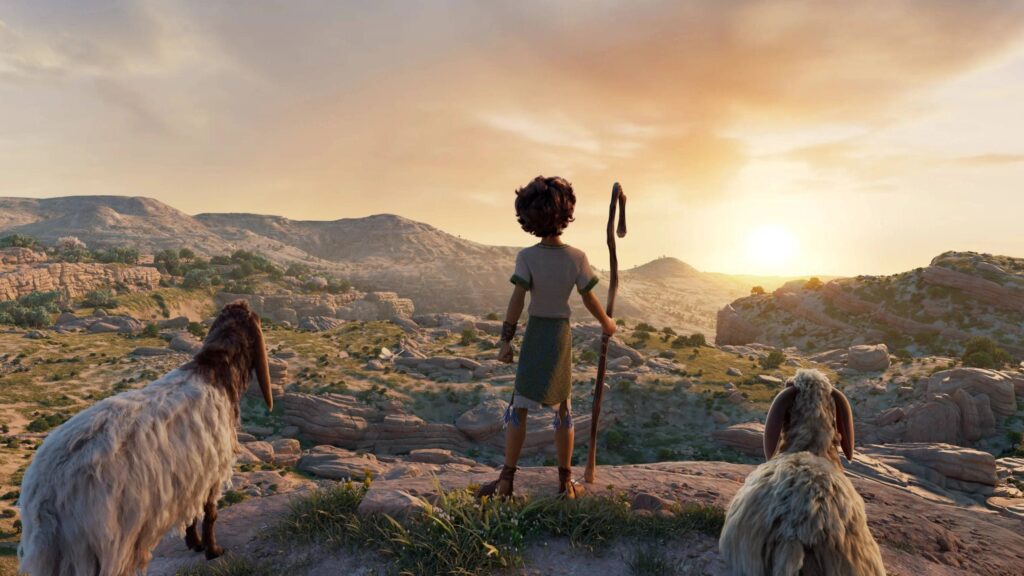
Before taking center stage in the decisions of nations, the protagonist lives the simple and challenging routine of a shepherd boy. It is in the solitary fields of Bethlehem that his character solidifies. Protecting his father’s sheep against wild predators such as lions and bears, the boy develops not only physical skill with the sling and staff, but also a deep intimacy with the Creator.
The solitude of the fields becomes the laboratory where his most beautiful compositions and reflections are born. Shepherd life teaches responsibility, courage under pressure, and selfless love for vulnerable creatures. This phase of childhood and youth is essential for the viewer to understand the origin of his later bravery: David’s strength never lay in an ornate sword or shining armor, but rather in a character shaped in silence and honest labor beneath the starry sky.


The Graphic Pinnacle in 3D Animation and Independent Audacity
Technically and artistically, David: Born a King stands out as a major achievement. Utilizing advanced 3D animation technology, the project delivers impressive visual quality, featuring detailed textures of fabrics, hair, desert dust, and realistic facial expressions for the characters. The lighting of each scene reflects the emotional tone of the narrative, varying between the warm, golden hues of sunset in the fields and the cool, oppressive colors of battle settings.
Most extraordinary is the realization that all of this technical excellence was achieved within an independent film format. Far from the pressures and standardized formulas of major Hollywood studios, the production team enjoyed the creative freedom to keep the core message intact, prioritizing the emotional truth of the story over commercial conveniences. This independent production model demonstrates the maturity of cinema dedicated to family and spiritual values, proving that it is possible to compete in technical quality while retaining the soul and integrity of the original concept
The Atmosphere of a Musical with Songs and Faith in God
Beyond its stunning visuals, the soundtrack plays a fundamental role in constructing the animated film. The decision to turn the production into a large-scale musical connects directly to the historical identity of King David himself, traditionally recognized as a talented psalmist and musician. The songs do not merely serve as pauses in the action; instead, they function as narrative drivers, revealing the internal dilemmas, prayers, and joy of the characters.
The compositions combine classical orchestral arrangements with regional and contemporary sounds, creating a striking auditory spectacle. Through the harmonious union of music and faith in God, the production touches the audience’s emotions deeply. The lyrics highlight the importance of praise in moments of anguish and the certainty that divine protection accompanies those who walk righteously. Each musical number elevates the tone of the plot, transforming the act of singing into a true prayer in motion
Conflict with the Philistines and the Shadow of Aggression
The political background of the feature film is marked by constant tensions and territorial threats. The Philistines, Israel’s historic rival, emerge as an oppressive military force equipped with iron weapons and intimidating warfare strategies. The constant presence of external aggression tests the resilience of the Hebrew people, who find themselves weakened by a lack of leadership and the fear paralyzing their armies in the Valley of Elah.
The representation of this conflict highlights the contrast between brute force and spiritual authority. While the enemy army relies on its capacity for destruction and psychological terror, the Israelites must learn that true victory is not achieved through violent methods or military pride, but through the restoration of their covenant with the Sacred. The dramatic tension built around the Philistine threat sets the stage for the production’s inevitable climax.
The Final Confrontation: David Versus Goliath and the Giant Man
The high point that every viewer awaits is undoubtedly the legendary duel between David and Goliath. The emergence of the giant man—a colossal figure who challenged the armies of the living God every morning with insults and mockery—casts a shadow of dread over the soldiers of Israel. No one dared accept the challenge of the Philistine champion, whose physical presence seemed unbeatable to any ordinary warrior.
It is in this scenario of despair that the young shepherd steps into action. Refusing King Saul’s heavy armor, which restricted his movements, the boy presents himself for battle armed only with his sling, five smooth stones from the brook, and unshakable trust. The moment the youth faces the giant in the valley is constructed with flawless cinematic dynamism in 3D animation, conveying the monumental scale of the challenge. The resolution of this battle reinforces the story’s central message: when determination and divine purpose unite, no obstacle on earth is too great to overcome.
The Impact of a Biblical Epic on Religion and Society
More than simple entertainment, the feature film establishes itself as an authentic biblical epic for modern times. By addressing universal themes such as courage, destiny, humility, and perseverance, the animated film transcends the barriers of institutional religion, offering valuable reflections on the individual’s role in the face of the world’s adversities.
The work invites the audience to view their own daily battles—the “giants” of doubt, fear, discouragement, and injustice—with a fresh perspective. By demonstrating that a youth without military resources could change the destiny of an entire nation through loyalty to his principles, the project inspires viewers of all ages to seek their own inner strength.
Final Thoughts on David: Born a King
The journey presented in David: Born a King consolidates the power of classic stories when retold with passion, respect, and cutting-edge technology. It is an animated film that honors its roots in the Bible and the Old Testament while establishing new standards for family and thematic cinema.
From the inspiring solitude of the shepherd boy in the desert to the anointing celebrated by the prophet, from the sonic richness of its musical structure to the electrifying tension of the confrontation with the giant man, the production delivers an unforgettable spectacle. As a top-tier independent film, the work leaves a lasting legacy on the victory of light over aggression, celebrating the beauty of music and faith in God within a grand and emotional cinematic experience.